

Written by: Bruce Zheng (Steam System & Valve Application Engineering)
Reviewed by: NTVAL QA / Technical Team (Engineering Review)
Last updated: 2026-03-06 (v2.1)
Review cycle: Reviewed quarterly based on market feedback and catalog updates.
Methodology: This guide evaluates manufacturers using portfolio coverage (trap types), industrial application fit, QA/documentation capability (MTC & test records), engineering support, delivery reliability, and after-sales support. Information is compiled from publicly available manufacturer materials and common industrial steam system procurement practice aligned with widely used engineering standards such as ASME guidelines. Always confirm final selection against your project conditions and specifications before purchase.
Choosing a steam trap manufacturer is not just a vendor decision. In real steam plants, the wrong trap type—or an underqualified supplier—typically shows up as steam loss, poor heat transfer, water hammer, frequent maintenance, and unstable process control.
For EPC, plant engineering, and procurement teams, the practical question is:
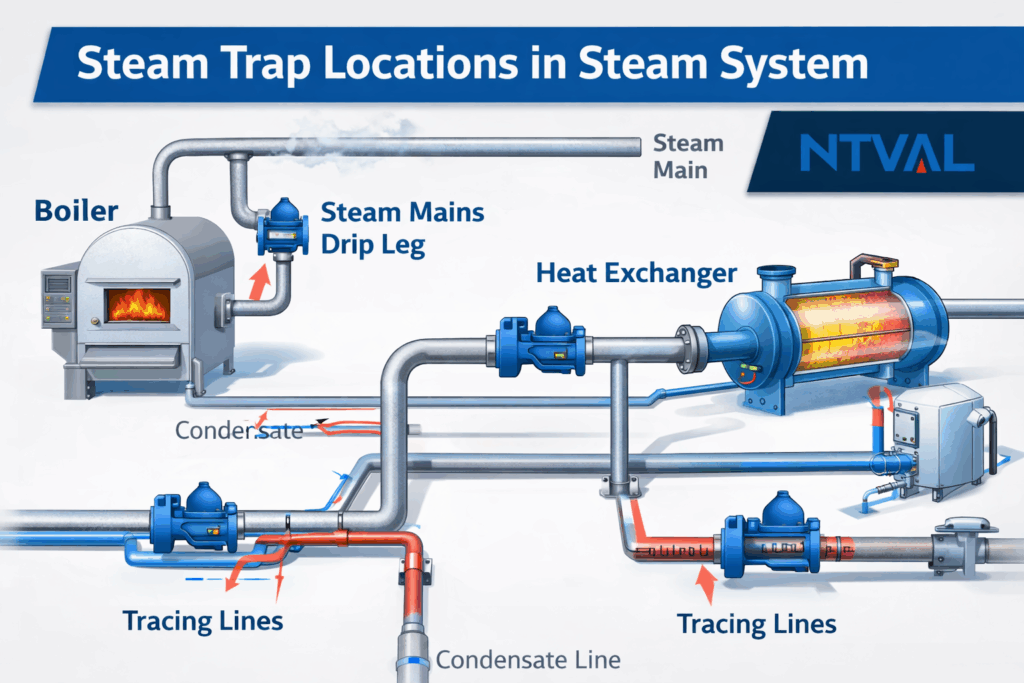
- Can the supplier provide the right trap type for your application (steam mains, tracing, heat exchangers, process equipment, condensate recovery)?
- Can they support QA documentation (MTC, hydro/functional test evidence when specified, and inspection scope defined at RFQ stage)?
- Can they deliver reliably and support you after commissioning?
This article provides a supplier-selection framework, a trap type/application comparison, and a structured shortlist of nine manufacturers frequently considered in industrial steam systems.
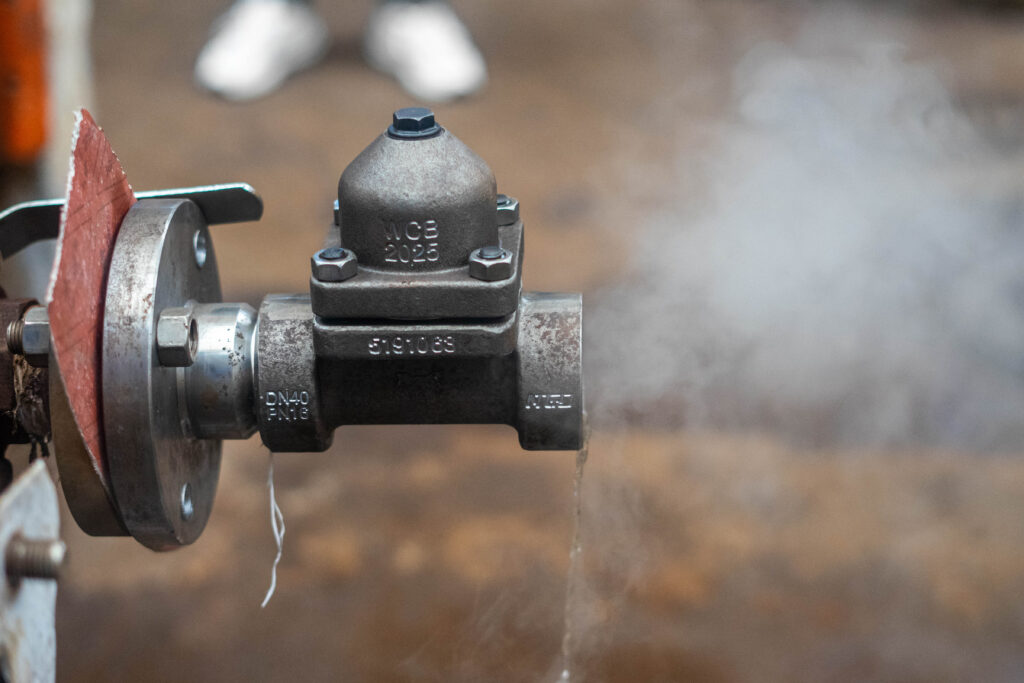
Quick Decision Summary (60 seconds)
- Steam mains / outdoor drip legs: start with Thermodynamic (disc) and verify backpressure tolerance.
- Tracing lines / strong start-up air venting: start with Thermostatic (capsule/bimetallic) and confirm temperature limits.
- Heat exchangers / process equipment (continuous discharge): start with Float & Thermostatic (F&T).
- Low/zero ΔP condensate recovery (“stall”): consider Pump trap solutions.
- If a supplier cannot provide clear QA documentation scope (e.g., MTC level, test evidence, traceability when required): treat as a high procurement risk.
- Steam systems also rely on control valves such as steam globe valves to regulate flow and maintain stable pressure in process lines.
1) How to Select a Reliable Steam Trap Manufacturer (Procurement Criteria)
When evaluating steam trap manufacturers for industrial projects, use these criteria as “non-negotiables.” They directly impact lifecycle cost and plant risk.
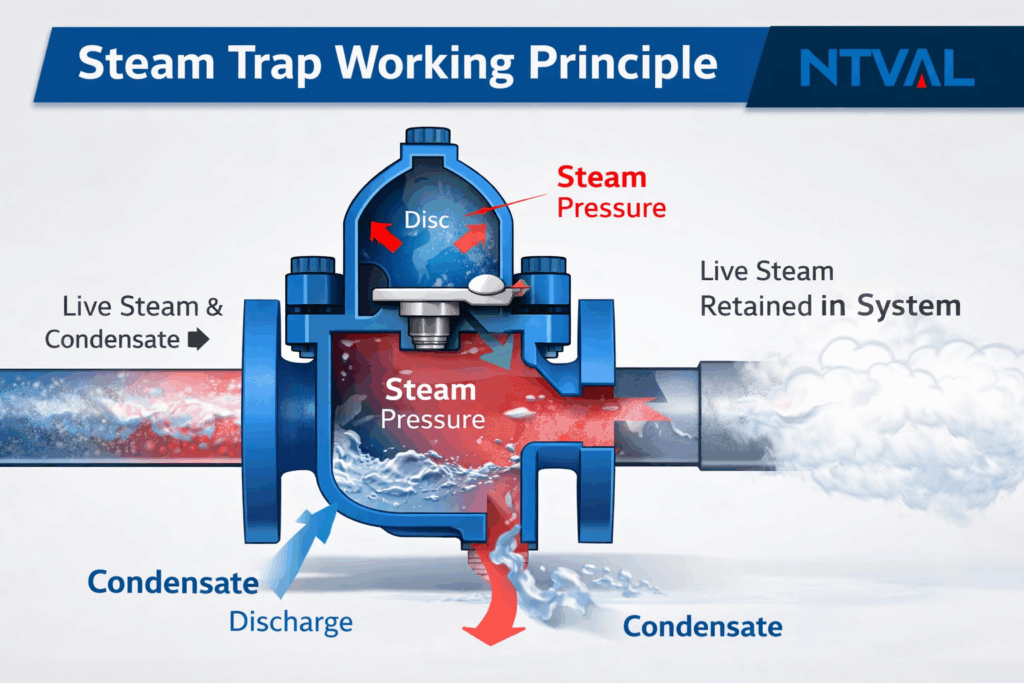
1. Portfolio coverage (trap types)
A capable manufacturer should cover the trap families that matter for industrial steam systems (at least thermodynamic, thermostatic, float & thermostatic, inverted bucket; plus pump traps if condensate recovery is needed). If a supplier pushes a single trap style for every duty, that is a red flag.
2. Application fit (where the traps actually work)
Traps are not interchangeable. Proper valve selection is also critical in steam systems, particularly when selecting the right valve type for flow control. Your manufacturer must demonstrate that they understand application boundaries such as:
- Backpressure sensitivity
- Load variation (continuous vs intermittent discharge)
- Start-up air venting
- Outdoor freeze risk
- Dirt tolerance / debris sensitivity
- Water hammer exposure
3. QA and compliance documentation (prove it, don’t promise it)
At minimum, procurement should be able to define and request documentation scope such as:
- Material Test Certificates (MTC / EN 10204 level as required by the project) aligned with international quality management systems such as ISO standards.
- Pressure test records (hydrostatic/pressure test evidence when specified)
- Functional / performance test evidence when specified
- Traceability (heat numbers / marking) for critical projects
- Inspection scope definition (witness points / third-party inspection if required by the client)
Keep it practical: the goal is not “more paperwork,” but enough evidence to control procurement risk.
4. Engineering and selection support (pre-sale and commissioning)
Steam traps require correct selection based on pressure, temperature, condensate load, differential pressure, backpressure, and application. Steam pressure and temperature relationships used in engineering calculations are widely referenced in engineering design resources, especially during preliminary sizing and operating-condition review.
A strong supplier can help you avoid the “wrong type / wrong size / wrong installation” failure cycle.
5. Delivery reliability and lead time
For project procurement, delivery risk is often larger than unit cost. Confirm:
- Standard vs custom lead times
- Export packing and documentation capability
- Spare parts availability
- After-sales response model
6. Total cost of ownership (TCO), not unit price
Steam traps can become “cheap and expensive” very quickly if they fail early or leak steam. Evaluate:
- Expected service life in the target duty
- Maintenance access requirements
- Screening/strainer compatibility
- Replacement interchangeability
2) Common Steam Trap Types & Where They Are Used (Quick Selection Table)
Use the table below as a practical map between trap type and application. This is the fastest way to keep supplier discussions technical and avoid generic sales answers.
| Steam Trap Type | Best-fit Applications | Key Advantages | Key Limitations / Notes |
|---|---|---|---|
| Thermodynamic (Disc) | Steam mains drip legs, outdoor duty, high pressure intermittent loads | Compact, rugged, freeze-resistant, simple maintenance | Sensitive to backpressure; not ideal for very light continuous loads |
| Thermostatic (Balanced pressure / capsule) | Tracing lines, start-up air venting, light-to-medium loads | Excellent air venting; energy efficient | Needs correct subcooling behavior; verify pressure/temperature limits |
| Bimetallic Thermostatic | Tracing, outdoor duty, wide pressure range duties | Durable; tolerant to pressure swings | Subcooling behavior must fit process; slower response in some duties |
| Float & Thermostatic (F&T) | Heat exchangers, process equipment, continuous discharge duties | Continuous condensate discharge + strong air venting | Larger footprint; installation quality matters; not “one-type-fits-all” |
| Inverted Bucket | Dirty condensate, rugged mechanical duty, steam mains (where acceptable) | Durable; handles water hammer well | Requires water seal; air venting weaker unless designed properly |
| Pump Trap | Low/zero ΔP condensate recovery, “stalled” equipment drainage | Solves condensate removal when ΔP is insufficient | Higher cost and complexity; verify maintenance plan |
Practical mapping (fast rules)
- Steam mains / drip legs (outdoor, rugged duty): thermodynamic disc or suitable mechanical designs
- Tracing lines / start-up air venting: thermostatic (balanced pressure or bimetallic)
- Heat exchangers / process equipment: float & thermostatic is common due to continuous discharge and air venting
- Dirty systems / debris exposure: inverted bucket is often chosen where its limits are acceptable
- Condensate recovery with low differential pressure: pump trap solutions may be required
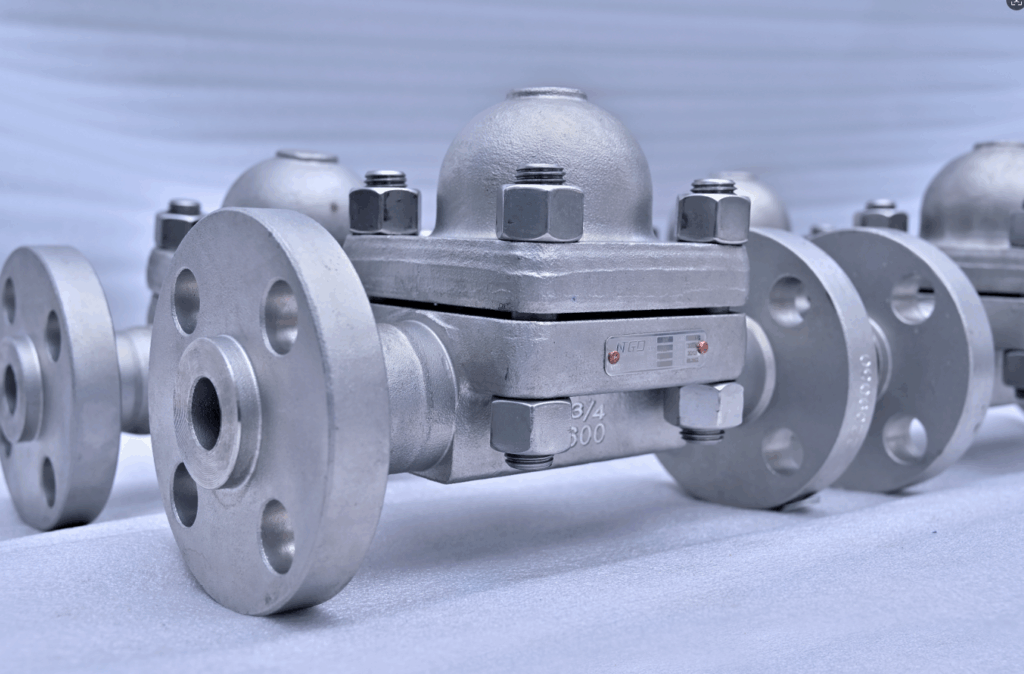
3) Steam Trap Sourcing Pitfalls: 3 Real-World Mistakes (and How to Avoid Them)
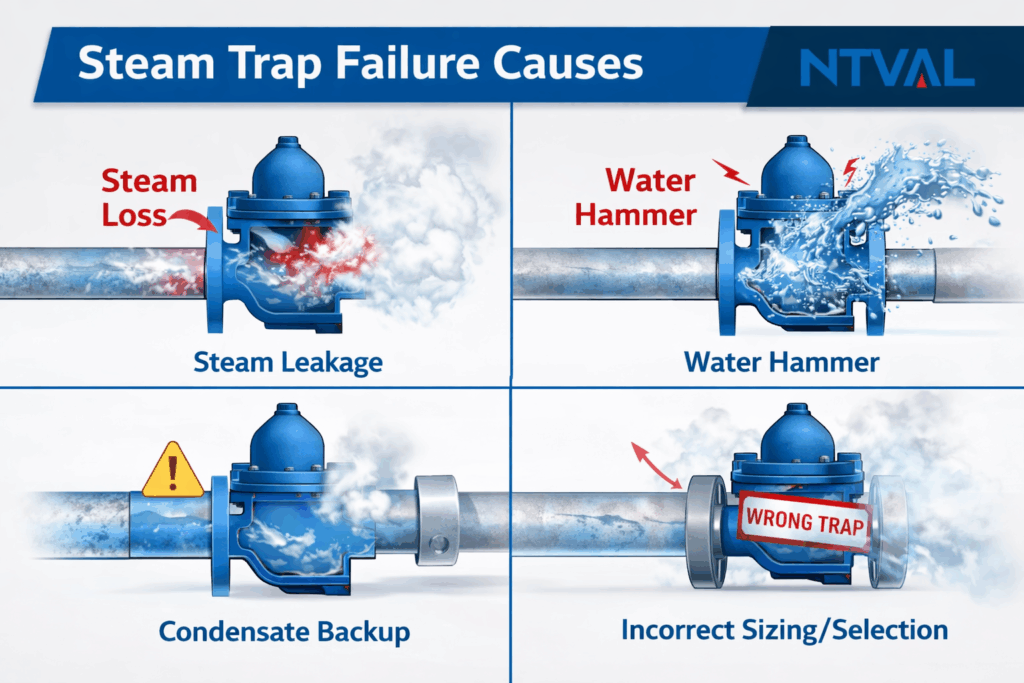
Pitfall 1 — Heat exchanger duty misapplied with intermittent-discharge traps
Mistake: Using an intermittent-discharge trap style on a heat exchanger where continuous drainage is required.
What happens: Condensate accumulates, heat transfer becomes unstable, outlet temperature swings, and water hammer risk increases, especially in condensate return lines where non-slam check valves are often used to stabilize flow and prevent reverse pressure surges..
Fix: Use Float & Thermostatic (F&T) for continuous discharge and strong air venting, and verify installation details (strainer, proper orientation, discharge piping).
Takeaway: Heat exchangers usually require continuous condensate removal, not just “any trap that can discharge.”
Pitfall 2 — Backpressure ignored in condensate return systems
Mistake: Selecting traps without confirming backpressure in the return line (elevated return, pressurized header, long discharge).
What happens: Effective ΔP drops, traps short-cycle or fail to discharge properly, and operators blame “bad trap quality.”
Fix: Measure/estimate backpressure, then select a trap type and size that tolerates the actual ΔP and discharge arrangement.
Takeaway: Backpressure is a selection input, not an afterthought.
Pitfall 3 — Supplier chosen on price without defined QA scope
Mistake: Awarding orders based only on unit price without locking documentation and inspection scope.
What happens: Projects face delays, inconsistent material traceability, missing test evidence, and higher operational risk after commissioning.
Fix: Define RFQ deliverables (MTC level, pressure test evidence when required, marking/traceability rules, witness points).
Takeaway: A “cheap” trap can become the most expensive item in the steam system when it drives downtime and steam loss.
4) Top 9 Steam Trap Manufacturers (Structured Profiles)
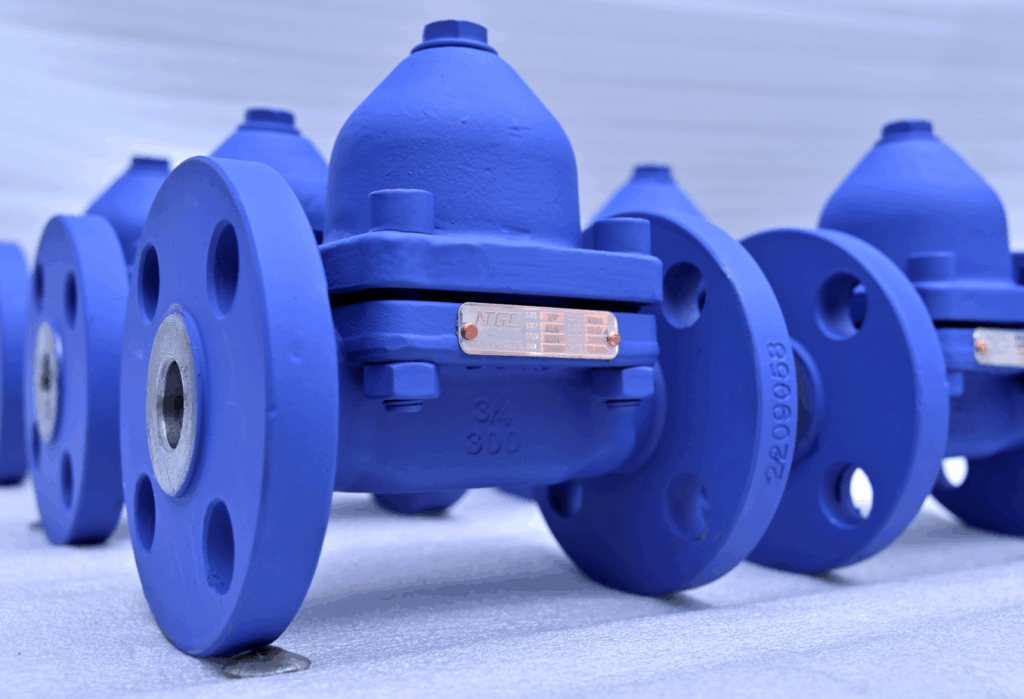
Important note on ranking: This list is a curated industrial shortlist. The order reflects overall visibility in industrial steam systems and portfolio relevance, not a universal “best brand” claim. Project suitability depends on your duty conditions, compliance requirements, and supply chain constraints.
1) Spirax Sarco
- Headquarters: Cheltenham, United Kingdom
- Founded: 1888
- Core steam trap portfolio: Thermodynamic, thermostatic (balanced pressure), float & thermostatic, inverted bucket (varies by region/line)
- Typical industries: Oil & gas, power, chemicals, food & beverage, general manufacturing
- Strengths: Broad steam system ecosystem; strong engineering support capability; global presence in many regions
- Best fit for: Large plants and projects that value integrated steam system solutions and consistent global support
- Procurement notes: Premium pricing is common; confirm local availability, lead time, and service support in your region
2) TLV
- Headquarters: Kakogawa, Japan
- Founded: 1950
- Core steam trap portfolio: Thermodynamic, thermostatic, float type / F&T (varies by product line), plus broader steam specialty equipment
- Typical industries: Chemicals, electronics, general manufacturing, power and process applications
- Strengths: Strong reputation for QA discipline and steam system know-how; robust documentation and support in many regions
- Best fit for: Plants emphasizing consistent quality and engineering-driven steam system management
- Procurement notes: Confirm selection support process and local service coverage; pricing typically reflects quality positioning
3) Miyawaki
- Headquarters: Osaka, Japan
- Founded: 1933
- Core steam trap portfolio: Thermostatic and mechanical styles depending on series; broad steam accessories portfolio in many markets
- Typical industries: General industrial steam, process plants, utilities (market-dependent)
- Strengths: Long-standing steam product history; focus on efficiency and stable operation in appropriate duties
- Best fit for: Buyers seeking proven Japanese manufacturing and a conservative performance profile in compatible applications
- Procurement notes: Confirm trap type availability in your target region and verify application boundaries (especially backpressure and load profile)
4) Vatac
- Headquarters: Wenzhou, China
- Founded: 1987
- Core steam trap portfolio: Common industrial trap types (varies by catalog)
- Typical industries: General industrial piping, utilities, project supply (market-dependent)
- Strengths: Broad valve/flow control manufacturing background; material options may be available by request
- Best fit for: Projects requiring multiple valve categories with steam trap procurement bundled into broader supply packages
- Procurement notes: Define QA documentation scope at RFQ stage and validate performance suitability for critical duties
5) NTVAL
- Headquarters: Wenzhou, China
- Founded: 1998
- Core steam trap portfolio (EN/DIN series): Thermodynamic, thermostatic, and free floating ball designs (series vary by application)
- Typical industries: Chemical processing, petrochemical, power generation, water & sewage, general steam systems (application examples shown on-site)
- Strengths: Project-oriented supply approach; engineering clarification workflow; export documentation readiness
- Best fit for (more specific project language):
- International EPC projects requiring defined documentation scope and consistent delivery planning
- Plants seeking a supplier that can support steam traps plus broader valve packages under one RFQ workflow
- Buyers needing EN/DIN standard configurations with clear end connection options
- Procurement notes: For critical projects, define documentation scope (e.g., MTC level, test evidence) and acceptance criteria at RFQ stage.
NTVAL Evidence-Based Capability Snapshot
- Materials: Cast steel and forged steel steam trap series depending on model configuration.
- Pressure classes: PN16, PN25, PN40, and PN64 available across different steam trap designs.
- Standards and connections:
- Face-to-face: EN 558
- Flanged ends: EN 1092
- Butt weld: EN 12627
- Additional options shown in technical tables: threaded, flanged, and socket weld connections.
- Quality control tests listed on the product page:
PMI test, sealing test, low-emission test, impact test, dimensional inspection, coating thickness test, PT inspection, and material inspection. - Documentation and delivery responsiveness:
- Quotation typically issued within 2 business days.
- Average production lead time 5–8 weeks, depending on size and quantity.
Note (kept conservative): The Steam Trap page lists QC tests; the FAQ commits to 3.1 MTC for valves generally. For project-critical steam trap orders, define the documentation scope in the RFQ to match your spec.
6) Valves Only Europe
- Headquarters: Europe-based sourcing model (per company positioning)
- Founded: 2003
- Core steam trap portfolio: Common trap categories including float type and thermodynamic (series vary)
- Typical industries: Industrial projects and process service (market-dependent)
- Strengths: Engineering-led positioning; supports varied order sizes (confirm certifications and documentation deliverables during RFQ)
- Best fit for: Buyers seeking European coordination for industrial procurement
- Procurement notes: Confirm certification validity, documentation scope, and manufacturing/QA chain before purchase
7) Kosen Valve
- Headquarters: Wenzhou, China
- Core steam trap portfolio: Industrial steam trap series (varies)
- Typical industries: Power, oil & gas, chemical projects (market-dependent)
- Strengths: Broad valve manufacturing background; competitive pricing positioning in many markets
- Best fit for: Cost-controlled projects where RFQ scope is clearly defined and duty is not ultra-critical
- Procurement notes: Confirm documentation scope, lead time for custom specs, and traceability requirements if applicable
8) Staitech
- Headquarters: United Kingdom
- Core steam trap portfolio: Steam trap series used in regulated/high-purity environments (scope varies)
- Typical industries: Pharmaceutical / biotech and other high-purity process environments (market-dependent)
- Strengths: Precision manufacturing positioning; emphasis on certification expectations in regulated environments
- Best fit for: Buyers prioritizing documentation discipline and controlled process requirements
- Procurement notes: Confirm portfolio depth for your exact steam duty and required certifications for your region/industry
9) VMV
- Headquarters: Wenzhou, China
- Core steam trap portfolio: Industrial steam trap series including pump trap / mechanical styles (varies)
- Typical industries: Project supply with after-sales emphasis (market-dependent)
- Strengths: Service responsiveness positioning; repair/support model may be attractive for certain buyers
- Best fit for: Buyers valuing service model and repair capability for non-critical to medium-critical duties
- Procurement notes: Confirm spare parts availability, documentation scope, and duty fit (especially backpressure/load profile)
5) Manufacturer Comparison Table
Use this to accelerate internal vendor shortlisting. Replace “RFQ-confirmed” fields with confirmed responses.
| Manufacturer | Region | Founded | Trap Types Coverage | Engineering Support | QA Docs / Records | Typical Fit | Notes |
|---|---|---|---|---|---|---|---|
| Spirax Sarco | UK | 1888 | Broad | Strong | RFQ-confirmed | Integrated steam systems | Premium positioning |
| TLV | Japan | 1950 | Broad | Strong | RFQ-confirmed | QA-driven plants | Confirm local service |
| Miyawaki | Japan | 1933 | Medium-broad | Medium-strong | RFQ-confirmed | Conservative industrial | Confirm series fit |
| Vatac | China | 1987 | Medium-broad | Medium | RFQ-confirmed | Project packages | Define QA scope |
| NTVAL | China | 1998 | Broad (RFQ-driven) | Strong (project-based) | 3.1 MTC stated on FAQ; define trap docs per RFQ | Export/project supply | EN/DIN series, multiple end connections |
| Valves Only Europe | EU | 2003 | RFQ-confirmed | RFQ-confirmed | RFQ-confirmed | EU sourcing | Confirm footprint |
| Kosen Valve | China | — | RFQ-confirmed | Medium | RFQ-confirmed | Cost-controlled projects | Validate lead time |
| Staitech | UK | — | RFQ-confirmed | Medium | RFQ-confirmed | High-purity niches | Confirm depth |
| VMV | China | — | RFQ-confirmed | Medium | RFQ-confirmed | Service-oriented | Confirm repair model |
6) RFQ Verification Checklist (Before You Request a Quote)
Most steam trap procurement delays and failures occur because RFQ inputs are incomplete. Use this checklist to get accurate selection and prevent “wrong type / wrong size” outcomes.
Copy-and-Fill RFQ Table
| RFQ Item | Your Project Details |
|---|---|
| Steam operating pressure & temperature | ___ barg / ___ °C |
| Condensate load (min/normal/max) | ___ kg/h |
| Target application | steam main drip / tracing line / heat exchanger / process vessel / condensate recovery |
| Backpressure (if any) | ___ barg |
| Pipe size & end connection | DN/NPS ___; flanged / threaded / socket weld / butt weld |
| Body material requirement | carbon steel / stainless steel / other (specify) |
| Required documents & inspection | MTC level, pressure test evidence, functional test if specified, witness points |
| Quantity & delivery destination | ___ pcs; ship to ___ |
| Acceptance / inspection plan | marking, packing, third-party inspection (if required) |
Response expectation (set procurement clarity):
- We aim to respond with selection clarification and documentation scope guidance within 24 hours, and issue a formal quotation typically within 2 business days after receiving complete RFQ inputs.
Supplier questions you should ask (and require written answers):
- Which trap type do you recommend for this duty and why (load profile + backpressure + air venting)?
- What documents will you provide by default, and which are optional?
- What is the lead time for standard vs custom?
- What spare parts are available and what is the recommended maintenance plan?
- What installation constraints must be followed (orientation, strainer requirement, discharge piping limits)?
7) Why Industrial Buyers Work with NTVAL
This section presents NTVAL capability without turning the page into self-promotion—keep it specific and verifiable.
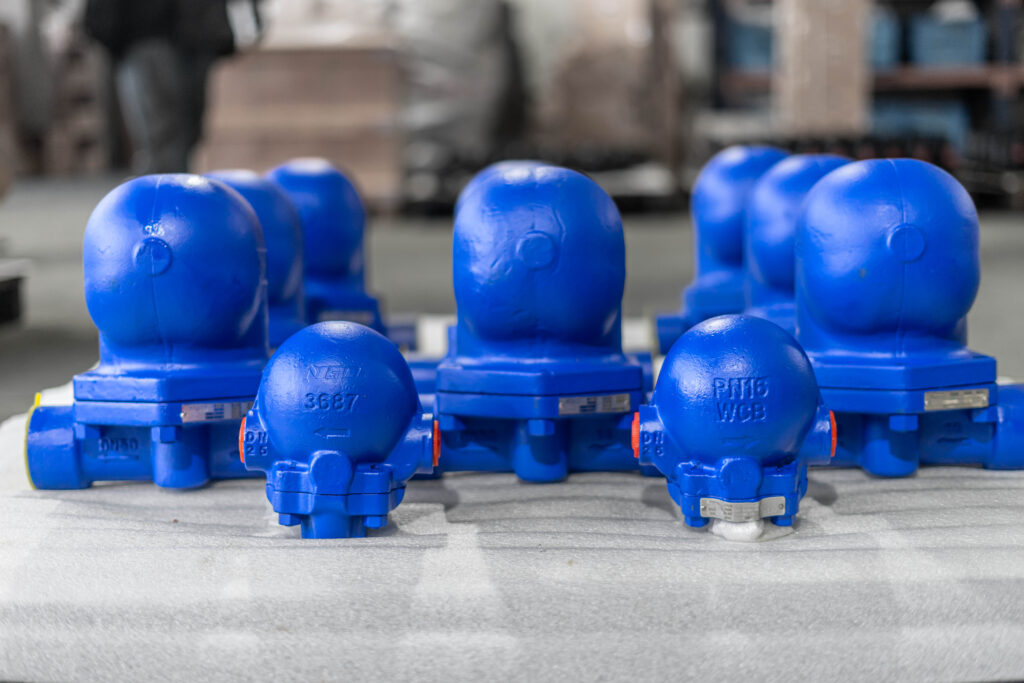
What NTVAL supports (based on published on-site information)
- Standards & end connections: EN 558 face-to-face; EN 1092 flanged; EN 12627 butt weld; technical tables show THREAD / FLG / S.W options.
- Pressure classes shown across series: PN16 / PN25 / PN40 / PN64 (series-dependent).
- Materials: cast or forged steel steam trap series.In corrosive environments such as chemical plants, corrosion-resistant alloy valves like Hastelloy may be required depending on media compatibility.
- Quality control tests listed: PMI test, sealing test, low emission test, impact test, dimensional inspection, painting thickness test, PT, material inspection.
Documentation & delivery expectations (site FAQ)
- 3.1 material test certificate stated on FAQ (valves) and provided prior to dispatch.
- Average production lead time: 5–8 weeks depending on size/quantity.
- Quotation speed: within 2 business days after inquiry.
Practical procurement note: for steam trap orders, define the exact documentation and inspection scope in the RFQ (MTC level, test evidence, witness points). That is how you keep supplier selection measurable and dispute-free.
Request a steam trap quotation with your operating conditions through our contact page to receive a technical recommendation and quotation.
Our team will confirm trap type suitability, documentation scope, and lead time based on your RFQ inputs.
8) FAQs About Steam Trap Manufacturers & Sourcing
Q1: Thermodynamic vs thermostatic steam traps — which is better?
Neither is “better” universally. Thermodynamic disc traps are commonly selected for steam mains drip legs and rugged outdoor duty because they are compact and durable. Thermostatic traps are often preferred for tracing lines where strong start-up air venting and temperature-based operation are beneficial. Selection must consider load pattern and backpressure.
Q2: Which steam trap type is commonly used for heat exchangers?
Float & thermostatic (F&T) traps are widely used on heat exchangers because they provide continuous condensate discharge and strong air venting. However, the system must be installed correctly to avoid water hammer and ensure stable operation.
Q3: What documents should I require from a steam trap manufacturer?
For industrial procurement, commonly requested items include MTC level definition (EN 10204 as required), pressure test evidence when specified, functional test evidence when specified, traceability markings when required, and packing/marking compliance. Critical projects may require defined witness points and third-party inspection scope.
Q4: Why do steam traps fail early even when the brand is “good”?
Most early failures are driven by misapplication (wrong trap type for duty), incorrect installation (missing strainers, wrong orientation), debris, backpressure issues, or water hammer. A capable manufacturer should support selection verification and installation guidance.
Q5: What lead time should I expect for steam traps?
Lead time depends on type, size, material, documentation scope, and whether the order is standard or custom. As a reference point, NTVAL states an average production lead time of 5–8 weeks depending on size and quantity. Always confirm standard vs custom lead times at RFQ stage.
Q6: How does backpressure affect steam trap performance?
Backpressure reduces effective differential pressure and may change how certain traps cycle or discharge condensate. It is especially important for duties where discharge piping is long, elevated, or tied into a pressurized condensate return system.
Q7: What information must be included in an RFQ to avoid wrong selection?
At minimum: steam pressure/temperature, condensate load, application type, backpressure, connection, material, documentation scope, and quantity/delivery requirements. Without these, suppliers will guess—and the plant pays later.
Q8: Can one steam trap model cover many applications?
In practice, no. Steam traps are application-specific components. A supplier pushing a single trap style for all duties is often optimizing sales simplicity rather than system performance.
{ “@context”: “https://schema.org”, “@type”: “FAQPage”, “mainEntity”: [ { “@type”: “Question”, “name”: “Thermodynamic vs thermostatic steam traps — which is better?”, “acceptedAnswer”: { “@type”: “Answer”, “text”: “Neither type is universally better. Thermodynamic disc traps are commonly used for steam mains drip legs and outdoor duties because they are compact and durable. Thermostatic traps are often selected for tracing lines and applications requiring strong start-up air venting. The correct choice depends on load pattern, pressure, and backpressure conditions.” } }, { “@type”: “Question”, “name”: “Which steam trap type is commonly used for heat exchangers?”, “acceptedAnswer”: { “@type”: “Answer”, “text”: “Float and thermostatic (F&T) steam traps are widely used for heat exchangers because they provide continuous condensate discharge and strong air venting. Proper installation and correct sizing are essential to avoid water hammer and ensure stable heat transfer.” } }, { “@type”: “Question”, “name”: “What documents should I request from a steam trap manufacturer?”, “acceptedAnswer”: { “@type”: “Answer”, “text”: “Industrial procurement often requires documentation such as EN 10204 material test certificates, pressure or hydrostatic test records, traceability markings, and packing or inspection documentation. The exact documentation scope should be defined during the RFQ stage.” } }, { “@type”: “Question”, “name”: “Why do steam traps fail early in industrial plants?”, “acceptedAnswer”: { “@type”: “Answer”, “text”: “Most steam trap failures are caused by incorrect trap type selection, improper installation, debris in the steam system, backpressure problems, or water hammer. Correct engineering selection and proper installation are essential to avoid early failure.” } }, { “@type”: “Question”, “name”: “What lead time should I expect for steam traps?”, “acceptedAnswer”: { “@type”: “Answer”, “text”: “Lead time depends on trap type, material, and order quantity. Typical production lead time for industrial steam traps is around 5 to 8 weeks, although custom specifications may require additional manufacturing time.” } }, { “@type”: “Question”, “name”: “How does backpressure affect steam trap performance?”, “acceptedAnswer”: { “@type”: “Answer”, “text”: “Backpressure reduces the effective differential pressure across the steam trap and can affect how condensate is discharged. It is important to consider backpressure when selecting steam traps for systems connected to condensate return lines.” } }, { “@type”: “Question”, “name”: “What information should be included in a steam trap RFQ?”, “acceptedAnswer”: { “@type”: “Answer”, “text”: “An effective RFQ should include steam pressure and temperature, condensate load, application type, backpressure conditions, pipe size, connection type, material requirements, and documentation or inspection scope.” } }, { “@type”: “Question”, “name”: “Can one steam trap model be used for multiple applications?”, “acceptedAnswer”: { “@type”: “Answer”, “text”: “Steam traps are application-specific devices. A single trap model cannot efficiently handle every duty such as steam mains, tracing lines, and heat exchangers. Proper trap selection must match the operating conditions and load profile.” } } ] }9) Need Help Selecting a Steam Trap Manufacturer? Get a Quote
If you want an RFQ-based recommendation for trap type and configuration, prepare:
- Pressure/temperature
- Condensate load (min/normal/max)
- Application and discharge arrangement
- Backpressure
- Connection/material
- Documentation and inspection scope
- Quantity and delivery schedule
Tap to Contact us now!
Dive Deeper Into Our Resources
Looking for more diverse product options? Browse through our handpicked selections:
Still haven’t found what you’re looking for? Don’t hesitate to contact us. We’re available around the clock to assist you.


