

Plug valves and globe valves are not interchangeable. The right choice depends on your control duty (on/off vs throttling), allowable pressure drop (ΔP), media condition (clean vs slurry), and leakage/emission requirements. This guide summarizes field-relevant differences and selection checkpoints.
🔎 Quick Answer:
- Choose Plug Valve for fast quarter-turn isolation with low pressure drop.
- Choose Globe Valve for precise throttling and high-temperature/high-pressure control.
1. Brief Overview of Valves
Valves are core control components in industrial piping systems. They are used to start/stop flow (isolation), regulate flow (throttling), protect equipment, and maintain stable process conditions under changing pressure, temperature, and media properties.
In real projects, valve selection is rarely about “which valve is better in general.” It is about matching the valve’s internal geometry, sealing behavior, allowable pressure drop (ΔP), and operating duty (on/off vs throttling) to the actual service conditions. This guide focuses on the engineering-level differences between plug valves and globe valves so you can make a decision that holds up in the field.
2. What is a Plug Valve?
A Plug Valve is a type of valve used to control the flow of liquids or gases through a pipe. It operates with a plug that turns to either allow or block the flow. The plug rotates 90° to achieve full open or full shutoff.
Structure of Plug Valve
- Plug: Rotates with a hole to regulate flow.
- Body: Main section that holds all components together.
- Bonnet: Protective cover that allows for maintenance and access to the plug.
- Seat: Provides a tight seal around the plug to prevent leaks.
Types of Plug Valves
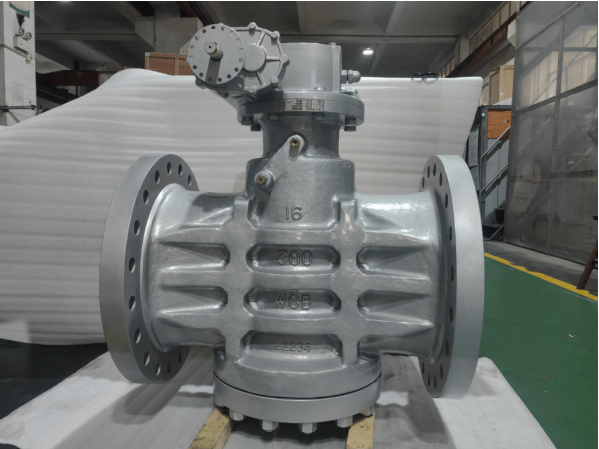
- Lubricated Plug Valve: This valve has a special grease between its parts to help them move smoothly. It’s great for high-pressure systems because it keeps the valve working well and lasts longer.
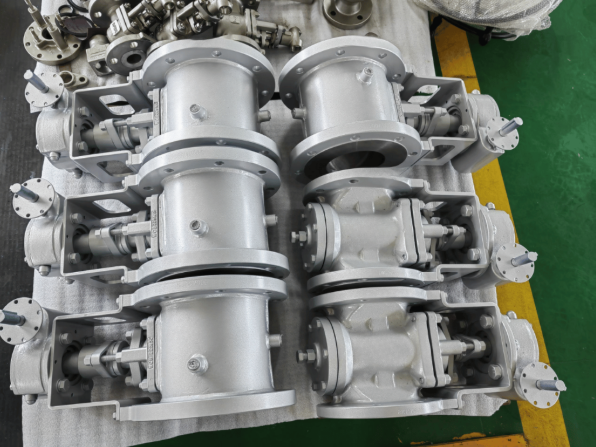
- Sleeve Plug Valve: This valve uses a flexible sleeve instead of a hard plug to control the flow. It’s perfect for handling dirty or rough liquids because the sleeve keeps the inside parts from getting worn out.
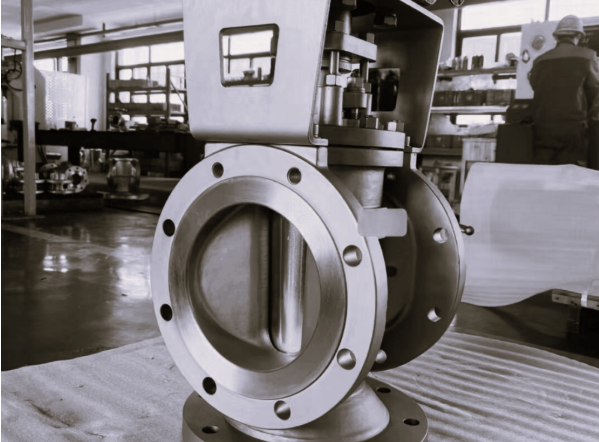
- 3-Way Plug Valve: This valve has three openings and can direct the flow of liquid to different paths. It is useful when you need to switch or guide the flow in various directions.
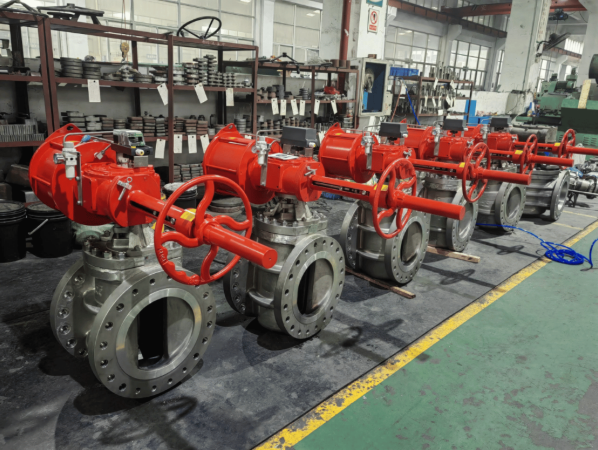
- Eccentric Plug Valve: This valve’s plug is slightly off-center, making it easier to move. It’s ideal for thick or rough liquids because this design makes it run smoother and need less maintenance.
Features of Plug Valve
Quarter-Turn Operation
Plug Valves typically use a 90-degree rotation to open or close. Most plug valve designs use a quarter-turn mechanism for fast isolation. This design is ideal for systems where quick changes in flow are needed, enabling rapid adjustments with minimal effort and enhancing overall control.
Low Pressure Drop
Plug Valves are designed to minimize flow resistance, resulting in a low pressure drop across the valve. For example, this characteristic helps keep the system efficient by reducing energy costs, as it allows for smooth fluid flow with minimal energy loss. The streamlined design supports consistent flow rates and helps maintain desired pressure levels.
High Flow Capacity
Plug Valves are designed to handle large volumes of fluid efficiently. Their internal design often allows for a high flow capacity with minimal resistance, making them suitable for applications with demanding flow requirements. This allows higher flow capacity with minimal resistance when fully open.
3. What is a Globe Valve?
A Globe Valve is a type of valve used to control fluid flow in a piping system by moving a disc or plug up and down. This design allows for precise adjustments and reliable shutoff. Globe valves are widely used in throttling and regulation service due to stable flow control characteristics.
Structure of Globe Valve
- Body: Primary pressure-containing structure, usually spherical or globe-shaped, housing all internal components in contact with the fluid.
- Bonnet: Leakproof closure for the valve body, available in screw-in, union, or bolted designs.
- Plug/Disc: Closure member attached to the stem, moving up and down to control fluid flow.
- Stem: Connects actuator to plug, transmitting actuation force to open or close the valve.
- Cage: Surrounds plug within the valve body, guiding it to the seat for proper shutoff and influencing flow control.
- Seat: Seat ring provides a stable surface for the plug to achieve a leak-tight seal when closed.
Types of Globe Valve
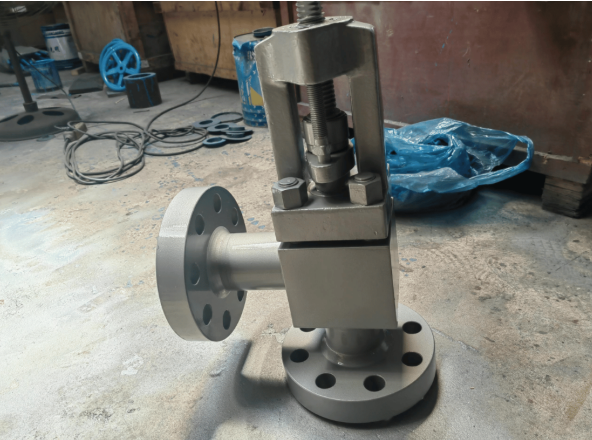
- Angle Globe Valve: Angle globe valves change flow direction by 90° and can reduce pressure drop compared with standard globe patterns, making them suitable for constrained piping layouts.
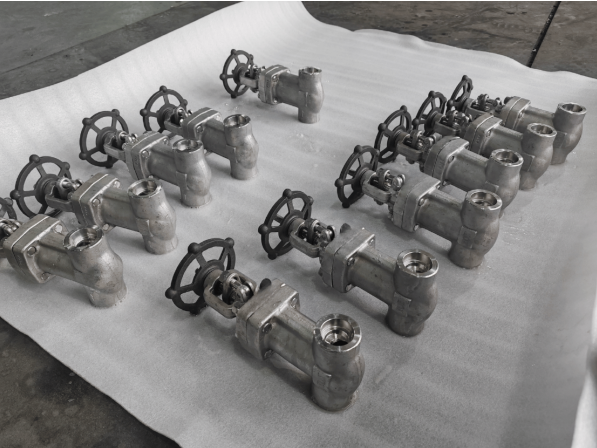
- Bellow Seal Globe Valve: This valve uses a special seal around the stem to stop leaks, especially in high-pressure or dangerous situations. It keeps everything tightly sealed.
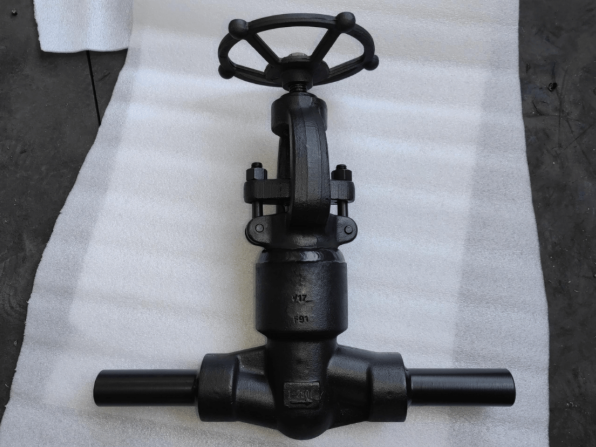
- Pressure Seal Globe Valve: Designed for very high-pressure areas, this valve has a special sealing system to handle extreme conditions. It’s used in industries where strong performance is needed.
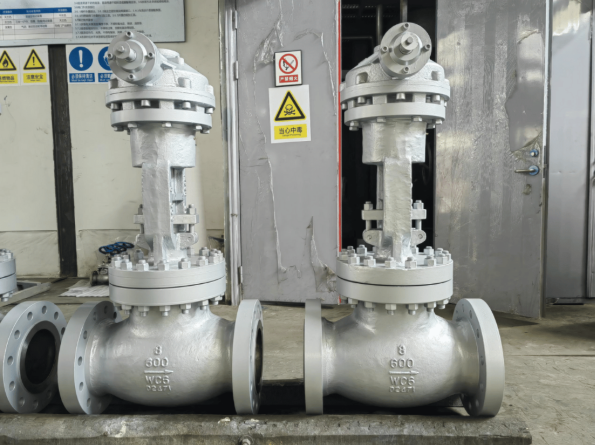
- Flanged Globe Valve: This valve has flanges on the ends to easily connect to pipes. It’s perfect for larger pipes that need a strong, leak-proof fit.
- Y Pattern Globe Valve: The Y-shaped design helps reduce pressure loss and keeps the flow smooth. It’s used where it’s important to minimize flow resistance.
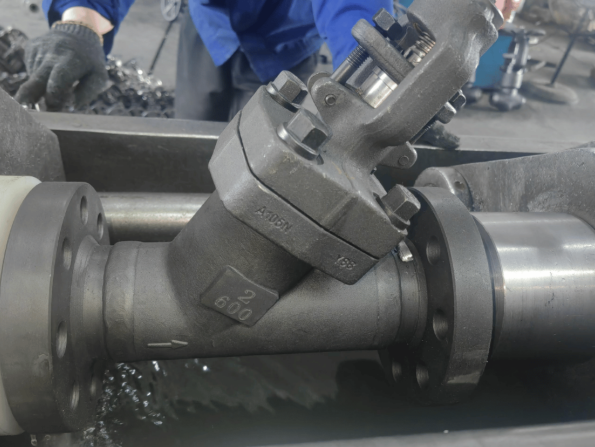
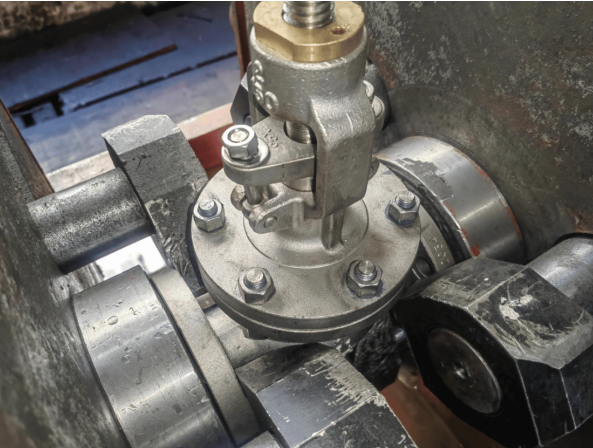
- Stainless Steel Globe Valve: Made from stainless steel, this valve resists rust and lasts long in tough environments. It’s ideal where both strength and rust resistance are needed.
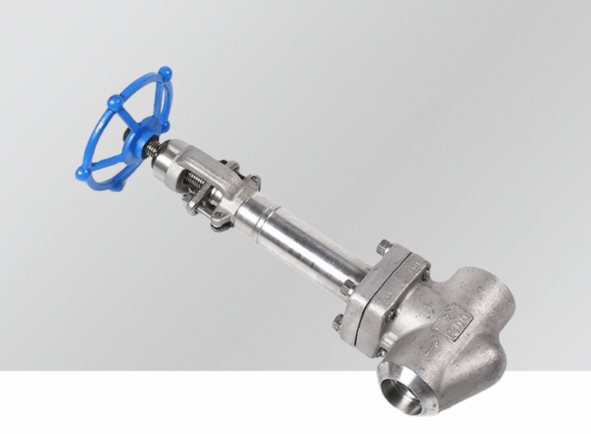
- Cryogenic Globe Valve: This valve works well with very cold fluids, like liquid nitrogen. It’s designed to handle extremely low temperatures.
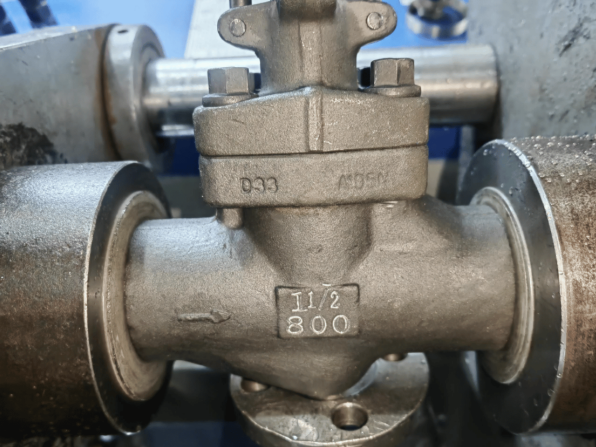
- Socket Weld Globe Valve: This valve has socket weld ends that provide a strong, leak-proof connection. It’s suitable for high-pressure and high-temperature uses.
Features of Globe Valve
Bodied Orifice Design
Globe Valves have a special shape inside that guides the flow through a narrow path. This design helps make flow control more accurate, reduces turbulent flow, and provides a steady flow by directing the fluid in a controlled manner. For instance, the precise control offered by this design is especially beneficial in applications where maintaining stable flow rates is crucial.
Precision Machined Seats
Globe Valves have precisely shaped seats that fit tightly. This tight fit prevents leaks and reduces the chance of contamination between fluids. It also enhances the valve’s sealing ability, making it effective in handling high-pressure applications and providing a cleaner operation.
Integral Throttling Mechanism
Globe valves use a stem-and-disc arrangement to deliver stable throttling performance across varying operating conditions.
4. Key Differences Between Plug Valves and Globe Valves
The following comparison summarizes functional differences relevant to field selection. Both valve types have distinct roles and features, which can influence their suitability for various applications. Here is the key differences between Plug Valves and Globe Valves in the table below:
| Characteristic | Plug Valve | Globe Valve |
| Operation | A plug rotates to fully open or close the flow. | A stem and disc adjust the flow control. |
| Flow Control | Provides quick on/off control with a simple turn. | Allows for precise flow control and throttling. |
| Pressure Drop | The design minimizes pressure drop due to smooth flow. | The design causes a higher pressure drop. |
| Maintenance | Requires less maintenance due to fewer components. | May require more maintenance due to complexity. |
| Applications | Best for on/off control in simpler systems. | Ideal for applications needing precise flow regulation. |
| Space Requirements | Compact design fits well in tight spaces. | Larger design needs more space. |
| Temperature Handling | Handles a wide range of temperatures effectively. | Suited for high-temperature environments. |
| Leakage | Can be prone to leakage if not properly maintained. | Generally offers better leak prevention. |
| Flow Path | Flow is controlled by rotating a cylindrical or conical plug. | Flow is directed through a globe-shaped body. |
| Design Complexity | Simpler design with fewer moving parts. | More complex design with multiple components. |
| Throttling Ability | Limited throttling ability; primarily for on/off control. | Excellent throttling ability for fine adjustments. |
| Cost | Typically less expensive due to simpler design. | Generally more costly due to complex design. |
| Torque / Operating Effort | Quarter-turn; torque varies by sealing design (sleeved/lubricated/eccentric); actuator sizing is key in large sizes | Multi-turn; typically higher turns/time; good controllability but slower operation |
| Cv / Flow Coefficient (relative) | Generally higher (more direct flow path when full open) | Generally lower (tortuous path; higher ΔP) |
| Typical Standards | API 599 / API 6D (depends on design & end connections) | ASME B16.34 / API 602 (common for forged) / API 623 (where applicable) |
| Severe Service Suitability | Slurry/solids: eccentric/sleeved plug valves are common choices | Clean HTHP throttling: globe valve is common; slurry/solids not preferred |
60-Second Decision Summary:
If your application is primarily on/off → Plug Valve.
If your application requires continuous throttling → Globe Valve.
If media contains solids → Eccentric Plug Valve.
If emission control is critical → Bellow Seal Globe Valve.
The table highlights operational and hydraulic differences for engineering evaluation.
Not sure which valve fits your duty?
Send us line size, pressure class, media, temperature, and control requirement (on/off or throttling) — our team will respond with a selection suggestion and quotation.
5. Engineering Decision Factors (Field Notes)
When a Plug Valve Is a Bad Fit (Especially for Throttling)
Plug valves are primarily designed for quick on/off isolation, not long-term throttling. In continuous throttling or prolonged partial-open operation, the plug/seat interface can experience accelerated wear, which often leads to:
- Rising operating torque (harder to turn or actuator overload risk)
- Deteriorating shutoff tightness and increased leakage risk
- Unstable control at small openings (poor “fine” adjustment)
If throttling is unavoidable, do not assume a standard plug valve will perform like a control valve. Specify the throttling duty clearly (ΔP range, flow envelope, cycle frequency, media condition) and validate performance with the manufacturer (trim/design selection, torque margin, and application-specific verification).
When a Globe Valve Becomes Inefficient (Especially for High Flow)
Globe valves excel at precise throttling, but they can be inefficient when the priority is high flow with minimal pressure loss. Because the flow path is more restrictive, globe valves typically create higher pressure drop (ΔP), which can translate to:
- Higher pump energy consumption and operating cost over time
- Added heat/noise/vibration potential in high ΔP service (duty-dependent)
- Reduced system efficiency when the valve is frequently required to pass large flow rates
Also, globe valves are multi-turn and generally slower to fully open/close than quarter-turn valves. For applications where fast isolation is expected (quick shutoff requirements), verify whether a globe valve’s operating speed and actuation concept meet the system expectation.
Quick If–Then Guide (Fast Selection Logic)
Use this quick logic to shortlist the valve type before final specification:
- If the media contains solids/slurry or is prone to clogging, then consider an eccentric or sleeved plug valve (depending on duty and abrasiveness).
- If the application requires precise throttling and the media is relatively clean, then a globe valve is typically the safer choice for stable control.
- If the duty is frequent quick on/off isolation, then a plug valve (quarter-turn) is often preferred for speed and simplicity.
- If fugitive emission control is critical, then a bellow seal globe valve (where applicable) is commonly selected to minimize stem leakage risk.
Field Example
The following examples reflect typical industrial service scenarios and selection logic used in field applications.
Steam Condensate Control (Throttling Duty)
In a medium-pressure steam condensate return system (Class 300, clean condensate, 180–220°C), stable downstream pressure and controlled flow were required to prevent vibration and flashing. A globe valve was selected due to its predictable throttling characteristic and better control stability at partial openings. The result was stable ΔP control and reduced noise under varying load conditions.
Crude Oil Transfer Line (Isolation Duty)
In contrast, a crude oil transfer line (Class 600, intermittent operation, frequent open/close cycles) required fast isolation with minimal pressure loss. A lubricated plug valve was selected to provide quarter-turn shutoff, lower pressure drop in full-open position, and simpler actuation. The configuration reduced operating time during shutdown sequences and minimized torque fluctuation during cycling.
6. 3 Tips for Choosing the Right Valve for Your Needs
Valve selection should be based on duty type, flow characteristics, and allowable pressure drop. Here are some key factors to consider when choosing between Plug Valves and Globe Valves:
#1 Flow Capacity and Pressure
Evaluate the flow rate and pressure needs of your system. For high flow rates and significant pressure demands, Plug Valves are typically suitable as they handle large volumes efficiently with minimal pressure loss. On the other hand, if precise control is needed under varying pressure conditions, Globe Valves are ideal due to their ability to regulate flow accurately despite higher pressure drops.
#2 Valve Material Compatibility
Consider the materials used in the valve’s construction. Plug Valves should be made from materials that resist wear and tear, especially in systems with abrasive or corrosive fluids. In contrast, Globe Valves should be constructed from materials that can handle high temperatures and pressures, as they often deal with more extreme conditions.
#3 Adjustment Frequency
Evaluate the required adjustment frequency and control precision. If frequent, precise adjustments are required, Globe Valves excel because they allow for detailed control over flow rates. However, if adjustments are infrequent or limited to simply opening and closing, Plug Valves provide a straightforward solution with less need for regular maintenance.
Quick Selection Checklist
- Line size & pressure class
- Media: clean / corrosive / slurry / solids
- Temperature range
- Control duty: on/off vs throttling
- Allowable ΔP
- Leakage / emission requirement
Share these parameters to get a fast recommendation.
Conclusion
Plug valves and globe valves serve different control objectives. The selection should be based on operating duty (on/off vs throttling), allowable pressure drop (ΔP), media condition, torque limits, and leakage requirements — not on general preference.
If the application prioritizes fast isolation with low pressure loss, a plug valve is often appropriate. If stable throttling and precise flow regulation are required, a globe valve is typically the safer choice.
For project-specific selection, define line size, pressure class, temperature range, media type, and control duty. With these parameters clarified, the appropriate valve type can be determined with greater confidence.
FAQ
1. Which is better: plug valve or globe valve?
Neither valve type is universally superior. Plug valves are typically preferred for quick quarter-turn on/off isolation with low pressure drop and simple operation. Globe valves are preferred when precise throttling, stable flow regulation, or high-temperature/high-pressure service is required. The final selection depends on control duty, media condition, allowable pressure drop (ΔP), and leakage requirements.
2. Can a plug valve be used for throttling service?
Plug valves are primarily designed for isolation duty. While limited throttling is possible in some applications, continuous partial-open operation may accelerate wear at the plug/seat interface, increase operating torque, and reduce sealing performance over time. For long-term or precise throttling service, globe valves are generally more suitable.
3. Which valve has lower pressure drop: plug valve or globe valve?
In fully open position, plug valves typically have lower pressure drop due to a more direct flow path. Globe valves introduce higher resistance because the flow changes direction inside the body. In high-flow systems where energy efficiency is critical, pressure drop should be evaluated during valve selection.
4. Which valve is better for slurry or media containing solids?
For slurry or media containing suspended solids, eccentric or sleeved plug valves are commonly selected because their geometry reduces clogging risk and can better tolerate abrasive conditions. Standard globe valves are generally not recommended for solids-heavy service due to potential seat erosion and blockage.
5. When should a bellow seal globe valve be selected?
A bellow seal globe valve is typically selected when fugitive emission control or zero stem leakage is critical, especially in toxic, flammable, or hazardous media service. The bellows assembly isolates the stem from the process fluid, reducing external leakage risk compared to conventional packed stem designs.
Last Updated: March 2026
This article was refreshed to reflect field selection considerations (pressure drop, throttling duty limits, emission-sensitive applications) and to improve clarity for engineering and procurement readers.
Dive Deeper Into Our Resources
Looking for more diverse product options? Browse through our handpicked selections:
For some insightful reads, we’ve curated a list of recommended articles just for you:


